What Is the Balkans?
The Balkans is a peninsula in southeastern Europe, roughly bounded by the Adriatic and Ionian Seas to the west, the Aegean and Mediterranean to the south, and the Black Sea to the east. Depending on who you ask, the region includes: Albania, Bosnia and Herzegovina, Bulgaria, Croatia, Greece, Kosovo, Montenegro, North Macedonia, Romania, Serbia, Slovenia, and the European part of Turkey.
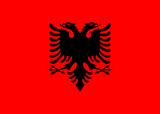
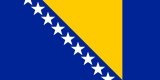
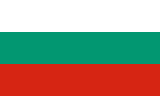
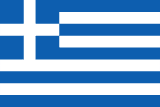
Because the borders of the region are political as much as geographical (nobody agrees on exactly where the Balkans ends), it's often easier to describe it by feel: a place of extraordinary diversity in a relatively small space — dozens of languages, multiple alphabets, Islam, Orthodox Christianity, and Catholicism all living side by side.
Why Is It Called the Balkans?
The name comes from the Balkan Mountains — the range that runs east–west through Bulgaria, known locally as Stara Planina (Old Mountain). The word Balkan itself is of Turkish origin, meaning roughly wooded mountain range or chain of forested hills. Ottoman cartographers used the name for the mountain range, and over time it spread to describe the whole peninsula they governed.

A region people constantly compare with the wrong one
The Balkans gets mixed up with the Baltics all the time, mostly because the names sound similar at a glance. That is exactly why the distinction is worth learning properly: same-looking words, completely different parts of Europe.
Not to Be Confused with the Baltics
This one trips people up constantly. The Baltics (or Baltic states) are three entirely different countries in northern Europe: Estonia, Latvia, and Lithuania — all sitting on the eastern shore of the Baltic Sea. They are not part of the Balkans, share no historical connection with the Balkan peninsula, and are geographically about 1,500 km apart. The similarity in name is purely coincidental (Baltic comes from the Latin mare Balticum, meaning Baltic Sea). So: Balkans = southeastern Europe, Sarajevo and Belgrade. Baltics = northern Europe, Tallinn and Riga. Different history, different cultures, different corner of the map entirely.
Balkans
Southeastern Europe, mountain ranges, Adriatic and Aegean connections, and capitals like Sarajevo, Belgrade, and Skopje.


Baltics
Northern Europe, Baltic Sea coast, and capitals like Tallinn, Riga, and Vilnius.


A Few Surprising Facts
- WWI's spark: The assassination of Archduke Franz Ferdinand in Sarajevo, Bosnia in 1914 triggered the First World War — earning the region the nickname powder keg of Europe.
- Ancient lakes: Lake Ohrid on the North Macedonia–Albania border is one of the oldest lakes in the world (estimated 3–5 million years old) and home to species found nowhere else on Earth.
- The birthplace of Alexander the Great: Pella, in what is now northern Greece near the North Macedonian border, was home to history's most famous conqueror.
- Vampire folklore: The concept of the vampire as we know it today originates from South Slavic and Romanian oral tradition — very much a Balkan export.
- Newest country in Europe: Kosovo declared independence in 2008, making it one of the world's newest countries, though its status remains partially disputed.
Why It Matters for Geography Quizzes
The Balkans is a geography learner's dream and nightmare in equal measure. Capitals like Podgorica, Skopje, Pristina, and Sarajevo are some of the trickiest in Europe — and getting them right is genuinely satisfying. Think you can name them all?
Test yourself on European capitals — including the tricky Balkan ones — on CapQuiz.