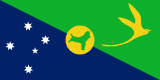
As we approach the most wonderful time of the year, there's a place on Earth that carries the holiday spirit in its very name: Christmas Island. This remote Australian territory in the Indian Ocean has a fascinating history tied to its Christian-inspired name, and offers a unique multicultural celebration of the season that reflects its diverse population.
🎄 How Christmas Island Got Its Name
The story of Christmas Island's name is beautifully straightforward—and yes, it has Christian roots! On Christmas Day, 1643, Captain William Mynors of the British East India Company ship Royal Mary sailed past an uncharted island in the Indian Ocean. Following the European tradition of naming newly discovered lands after the saints' days on which they were found, Captain Mynors named it "Christmas Island" in honor of the day he first sighted it.
This naming convention was common among European explorers, who often used the Christian calendar to mark their discoveries. The island's name is a direct reference to the celebration of the birth of Jesus Christ, making it one of the few places in the world named explicitly after the Christmas holiday.
Interestingly, Christmas Island wasn't the first to be discovered on December 25th—there's also Kiritimati (pronounced "Christmas") in the Pacific, part of Kiribati, which was named by Captain James Cook on Christmas Eve 1777. But the Indian Ocean's Christmas Island remains the most famous of the Christmas-named territories.
📍 Where in the World Is Christmas Island?
Christmas Island is located in the Indian Ocean, approximately 350 kilometers (220 miles) south of Java, Indonesia, and about 1,550 kilometers (960 miles) northwest of the Australian mainland. Despite being closer to Indonesia geographically, it's been an Australian territory since 1958.
The island is relatively small—just 135 square kilometers (52 square miles)—but it's packed with natural wonders. It's essentially the tip of an ancient volcano that rises dramatically from the ocean floor, creating steep cliffs and a rugged, jungle-covered interior.
Christmas Island is one of Australia's overseas territories, a category that includes places like Norfolk Island, the Cocos (Keeling) Islands, and the Australian Antarctic Territory. These territories are fascinating examples of how political boundaries don't always align with geographic proximity!
🏝️ A Brief History of Christmas Island
Despite being "discovered" in 1643, Christmas Island remained largely uninhabited until the late 19th century. The island's rich phosphate deposits were discovered in 1887, leading to British annexation in 1888. Phosphate mining became the island's primary industry, attracting workers from China, Malaysia, and Singapore.
During World War II, Christmas Island was occupied by Japanese forces from 1942 to 1945, a period that significantly impacted the small community. After the war, the island was transferred from British to Australian administration in 1958, and it became an Australian territory.
Today, Christmas Island is perhaps best known for its spectacular red crab migration, where millions of bright red land crabs make their annual journey from the forest to the ocean to spawn—one of nature's most incredible spectacles.
🎅 Celebrating Christmas on Christmas Island
What would Christmas be like if you traveled to Christmas Island during the holiday season? The celebrations are wonderfully multicultural, reflecting the island's diverse population of approximately 1,800 people, who are primarily of Chinese, Malay, and European descent.
Multicultural Festivities: Christmas on Christmas Island blends Western traditions with Asian cultural elements. You'd find Christmas trees decorated alongside Chinese New Year preparations (since the holidays often overlap), creating a unique fusion of celebrations. The island's restaurants might serve both traditional Christmas dinners and Asian-inspired holiday meals.
Community Spirit: Despite its small population, Christmas Island has a strong sense of community. Christmas celebrations often include community gatherings, beach barbecues (taking advantage of the tropical climate), and shared meals that bring together the island's different cultural groups.
Tropical Christmas: Unlike the snowy Christmases of the Northern Hemisphere, Christmas on Christmas Island is warm and tropical. The average temperature in December is around 28°C (82°F), making it perfect for outdoor celebrations. Instead of snowmen, you might see sandcastles on the beach!
Natural Celebrations: The island's natural beauty becomes part of the celebration. The lush rainforest, pristine beaches, and incredible marine life offer a unique backdrop for holiday activities. Many residents and visitors take advantage of the warm weather to enjoy snorkeling, hiking, and wildlife watching during the Christmas period.
Religious Observance: Given the island's Christian-named heritage, Christmas Day is a public holiday, and there are church services for those who wish to attend. The island's small Christian community celebrates with traditional services, while the multicultural nature means that other religious and cultural celebrations also take place throughout the year.
🌏 Christmas Island: A Geographic Gem
Beyond its festive name, Christmas Island is a geographic marvel. It's home to unique species found nowhere else on Earth, including the Christmas Island frigatebird and the Christmas Island blue-tailed skink. The island's isolation has created a unique ecosystem that's been recognized as a national park.
The island's location makes it strategically important, and it has served various roles throughout history—from a phosphate mining center to a potential spaceport location. Its position in the Indian Ocean also makes it a key point for understanding the region's geography and maritime routes.
🎁 Wrapping Up: Christmas Wishes and Geographic Discovery
As we celebrate this holiday season, Christmas Island reminds us that geography and culture are beautifully intertwined. A place named on Christmas Day over 380 years ago continues to honor that heritage while embracing its multicultural present.
From all of us at CapQuiz, we wish you a Merry Christmas and a Happy New Year filled with discovery, learning, and joy! May your holidays be as diverse and fascinating as Christmas Island itself.
Want to learn more about overseas territories like Christmas Island? Test your geography knowledge with our quizzes! When you play our Capital Quiz or Map Quiz, you can choose to include overseas territories in your questions. This option lets you explore the fascinating world of territories, dependencies, and special administrative regions—from Christmas Island to Gibraltar, from the Falkland Islands to French Guiana. It's a great way to discover how political geography works beyond the standard country list!
Challenge yourself this holiday season: can you identify the capitals of overseas territories? Do you know where Christmas Island is located on a map? Try our quizzes and see how well you know the world's territories and their unique stories!