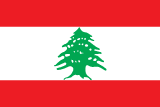
Long before Rome dominated the Mediterranean, another civilization had already established a vast network of trading cities across its shores. The Phoenicians, originating from the coastal region of modern-day Lebanon, were the ancient world's greatest seafarers and merchants. Between 1500 BCE and 300 BCE, they founded cities that would become some of the most important urban centers in history—many of which remain major cities today.
🏛️ The Phoenician Heartland: Lebanon's Ancient Trio
Byblos (Jbeil, Lebanon)
Perhaps the oldest continuously inhabited city in the world, Byblos was already ancient when the Phoenicians made it a major trading hub around 1200 BCE. The city was so famous for exporting Egyptian papyrus to Greece that the Greeks named their word for "book" (biblion) after it—giving us the word "Bible." Today, Byblos is a UNESCO World Heritage Site, and visitors can walk through layers of history spanning 7,000 years.
Tyre (Sour, Lebanon)
Tyre was the crown jewel of Phoenician civilization. This island city (later connected to the mainland by Alexander the Great's famous causeway) was renowned for producing the precious Tyrian purple dye, extracted from murex sea snails. This dye was so valuable that only royalty could afford it—hence the phrase "born to the purple." Tyre's sailors were legendary; it was Tyrian colonists who founded Carthage, and Tyrian ships that King Solomon employed to build his temple in Jerusalem.
Sidon (Saida, Lebanon)
Rivaling Tyre in importance, Sidon was famous for its glassmaking—the Phoenicians are credited with inventing blown glass around 50 BCE. Sidonian craftsmen were so skilled that their work was prized throughout the ancient world. The city's name lives on in the English word "Sidonian," once synonymous with "Phoenician."
🌊 Across the Sea: Phoenician Colonial Cities
Carthage (Tunis, Tunisia)
Founded in 814 BCE by Queen Dido (according to legend), Carthage grew to become the most powerful Phoenician city of all. Located in modern-day Tunisia, it eventually rivaled Rome itself, leading to the famous Punic Wars. At its height, Carthage controlled much of North Africa, southern Spain, Sardinia, and western Sicily. The city's circular harbor, the Cothon, was an engineering marvel that could house 220 warships. Though Rome destroyed Carthage in 146 BCE, the ruins near Tunis remain a testament to Phoenician ambition.
Cádiz (Spain) - Ancient Gadir
Founded around 1104 BCE, Gadir (modern Cádiz) was one of the Phoenicians' earliest western colonies—making it one of the oldest continuously inhabited cities in Western Europe. Located beyond the Pillars of Hercules (Strait of Gibraltar), Gadir was the gateway to Atlantic trade routes. The Phoenicians came for Spanish silver and tin from Britain, establishing trade networks that wouldn't be matched for over a millennium.
Palermo (Sicily, Italy)
Known to the Phoenicians as Ziz (meaning "flower"), Palermo was established as a trading post around 734 BCE. Its excellent natural harbor made it an ideal stop between Carthage and the eastern Mediterranean. The city would later be conquered by Rome, then the Arabs, then the Normans—each leaving their mark on what became Sicily's capital.
Valletta's Predecessors (Malta)
The Phoenicians settled Malta around 750 BCE, recognizing its strategic value in the center of the Mediterranean. They called the main island Maleth (meaning "safe haven"), from which the modern name derives. Phoenician tombs and artifacts found across the islands show they maintained a significant presence here for centuries.
Tripoli (Libya)
Originally three separate Phoenician colonies—Oea, Sabratha, and Leptis Magna—the region became known as Tripolis ("three cities"). Founded around the 7th century BCE, these cities served as crucial waypoints for trans-Saharan trade routes. Leptis Magna would later become one of the Roman Empire's most beautiful cities, and its stunning ruins can still be visited today.
Tangier (Morocco) - Ancient Tingis
At the western extreme of the Mediterranean, Tingis (modern Tangier) guarded the southern shore of the Strait of Gibraltar. Phoenician traders established this outpost to control access to the Atlantic. Legend associated the city with the Greek hero Hercules and the giant Antaeus. Today, Tangier remains a gateway between continents, just as it was 3,000 years ago.
🔤 The Phoenicians' Greatest Gift: The Alphabet
Perhaps the Phoenicians' most enduring legacy isn't a city at all—it's the alphabet. The Phoenician writing system, developed around 1050 BCE, was adopted by the Greeks, who added vowels and passed it to the Romans. Every Western alphabet, from English to Russian, traces its roots to those Phoenician merchants who needed a simple way to keep track of their far-flung trade.
🗺️ Test Your Mediterranean Knowledge
How well do you know the modern countries where these ancient Phoenician cities are located? From Lebanon to Tunisia, Spain to Libya, the Phoenician legacy spans multiple nations across the Mediterranean.
Take our Capital Cities Quiz and see if you can identify the capitals of all the Mediterranean countries! Or try our Map Quiz to test your knowledge of where these historically significant nations are located.
Want to explore more ancient geography? Check out our posts about transcontinental countries and the fascinating borders that divide our modern world.