Spain: World Champions, Map Champions Too
A trophy, then a map lesson
Spain's World Cup 2026 win has put La Roja back at the center of the football world. On 19 July 2026, Spain beat Argentina 1-0 after extra time in the final at New York/New Jersey, with Ferran Torres scoring the winner in the 106th minute.
That gives Spain a second men's World Cup title, after 2010. It also gives geography fans a fine excuse to zoom in on one of Europe's most varied countries: a kingdom with Atlantic and Mediterranean coasts, mountain chains, island groups, historic cities, and a language whose reach goes far beyond Europe.
Where is Spain?
Spain occupies most of the Iberian Peninsula in southwestern Europe. It borders Portugal to the west, France and Andorra to the northeast, the Bay of Biscay to the north, the Mediterranean Sea to the east and south, and the Atlantic Ocean to the west and southwest.
There is one extra map detail that makes Spain especially useful for quiz players: it is not only mainland Iberia. Spain also includes the Balearic Islands in the Mediterranean, the Canary Islands in the Atlantic off northwest Africa, and the North African cities of Ceuta and Melilla.
Quick CapQuiz memory hook
Think: Spain = Iberian Peninsula plus islands. Madrid is inland, Barcelona faces the Mediterranean, Seville points you toward Andalusia, and the Canaries remind you Spain reaches into the Atlantic near Africa.
How big is Spain?
Spain covers about 506,000 square kilometers. That makes it one of Europe's largest countries by area. Inside the European Union, Spain is the second-largest country by land area after France.
For comparison, Spain is larger than Germany, Poland, Italy, and the United Kingdom. It is smaller than France and far smaller than transcontinental Russia, but among the countries most people think of as western or southern Europe, Spain is a true heavyweight on the map.
- Spain: about 506,000 km2
- France: about 552,000 km2 in metropolitan Europe
- Germany: about 357,000 km2
- Italy: about 302,000 km2
- United Kingdom: about 244,000 km2
How many people live in Spain?
Spain has a population of roughly 47 million people. That puts it among Europe's more populous countries, though still behind giants such as Germany, France, the United Kingdom, and Italy.
The population is not spread evenly. Madrid, the capital, sits near the center of the country and anchors a huge metropolitan area. Barcelona is the great Mediterranean city of Catalonia. Valencia, Seville, Zaragoza, Malaga, and Bilbao all add different regional identities to the national picture.
The geography behind Spain's identity
Spain's landscape is more varied than many first-time map learners expect. Much of the interior is shaped by the Meseta Central, a broad high plateau. Around and across it are mountain systems such as the Pyrenees, the Sierra Nevada, and the Cantabrian Mountains.
The coastlines tell different stories too. The Mediterranean side is strongly associated with Barcelona, Valencia, beaches, and warm-weather tourism. The Atlantic side connects Spain to Galicia, the Canary Islands, and historic ocean routes. In the south, the Strait of Gibraltar narrows the gap between Europe and Africa to one of the most famous waterways on Earth.
Spain profile: the quiz essentials
- Official name: Kingdom of Spain
- Capital: Madrid
- Region: Southern Europe
- Population: about 47 million
- Area: about 506,000 km2
- Currency: Euro
- Official language: Spanish, also called Castilian
- Other major regional languages: Catalan, Galician, and Basque
- Government: Parliamentary constitutional monarchy
- National team nickname: La Roja
Language is one of Spain's biggest exports
Spain's official national language is Spanish, or Castilian, and it is one of the world's most widely spoken languages. That global reach is a major part of Spain's cultural geography: the language connects Spain to much of Latin America, parts of the Caribbean, Equatorial Guinea, and Spanish-speaking communities around the world.
Inside Spain, language is also regional. Catalan is widely used in Catalonia and the Balearic Islands, Galician in Galicia, and Basque in the Basque Country and parts of Navarre. For quiz players, that is a reminder that one country can hold several strong linguistic geographies at once.
A flag that is easy to spot
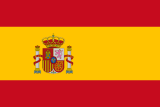
Spain's flag has three horizontal bands: red, yellow, and red, with the yellow band twice as tall as each red band. The coat of arms sits toward the hoist side, which helps distinguish it from simpler red-yellow-red patterns in a flag quiz.
The quick memory clue is simple: wide yellow middle stripe, red edges, coat of arms near the pole. Pair that with Madrid, Iberia, and the euro, and Spain becomes one of the friendlier European flags to lock in.
Mini quiz: Spain edition
1. What is the capital of Spain?
Madrid.
2. Which peninsula does Spain share mainly with Portugal?
The Iberian Peninsula.
3. What currency does Spain use?
The euro.
4. Which mountain range forms a natural border area between Spain and France?
The Pyrenees.
5. Spain's Canary Islands are in which ocean?
The Atlantic Ocean.
The takeaway
Spain's 2026 World Cup victory is a football story, but it also opens up a bigger geography story. Spain is large by European standards, populous without being Europe's biggest, and physically varied in a way that makes it memorable: plateau, mountains, Mediterranean coast, Atlantic islands, and cities with sharply different regional identities.
So when Spain appears in your next quiz, think beyond the trophy. Think Madrid, Iberia, Pyrenees, euro, Spanish language, Canary Islands, and a country whose map is every bit as interesting as its football.