A Caribbean Nation with a South American View
Most people think of Trinidad and Tobago as a Caribbean nation—and they're right. But here's the fascinating geographical twist: the country's closest neighbors aren't other Caribbean islands, but South American nations. Just 11 kilometers (7 miles) of water separate Trinidad from Venezuela's Paria Peninsula, making it closer to the South American mainland than to any other Caribbean island.
🌍 Quick Geography Facts
- Distance to Venezuela: 11 km (7 miles) at the nearest point
- Distance to Grenada (nearest Caribbean island): 140 km (87 miles)
- Continental shelf: Sits on South America's continental shelf
- Position: 10°N latitude, just off South America's northeast coast
Two Worlds, One Nation
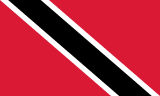
Trinidad and Tobago's flag tells its own story with bold diagonal stripes of red, white, and black. But the real story is in the nation's dual identity:
- Culturally Caribbean: Member of CARICOM, Caribbean Community
- Geographically South American: Part of the South American continental shelf
- Historically connected to both: Influenced by both Caribbean and South American cultures
The View Across the Gulf
On a clear day, Trinidadians in the northern part of the island can see Venezuela's mountains across the Gulf of Paria. This proximity has shaped the nation's history, culture, and economy in profound ways:
🇻🇪 Venezuelan Connections
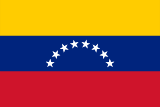
Historical ties: Trinidad was once part of the Spanish colonial empire, just like Venezuela. Spanish influence remains strong in place names, cuisine, and the annual celebration of parang music during Christmas.
Economic relationship: Trinidad and Tobago's energy sector has historically had connections with Venezuelan oil and gas industries, though political changes have affected these ties.
Migration: Venezuelans have migrated to Trinidad and Tobago for centuries, especially during recent economic challenges in Venezuela.
🇬🇾 Guyana: The Other Close Neighbor
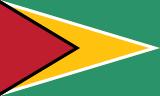
Caribbean Community members: Both Trinidad and Tobago and Guyana are CARICOM members, despite Guyana being on the South American mainland.
Shared heritage: Both nations have significant Indo-Caribbean populations, a legacy of indentured laborers from India arriving in the 19th century.
Cultural exchange: Chutney music, combining Indian and Caribbean influences, thrives in both nations.
A Caribbean Identity with South American Roots
Despite its geographical proximity to South America, Trinidad and Tobago is unquestionably Caribbean in culture and identity:
🎭 Cultural Caribbean Credentials
- Carnival: Trinidad and Tobago hosts one of the world's greatest Carnival celebrations, rivaling Rio de Janeiro
- Calypso and Soca: These music genres were born in Trinidad and spread throughout the Caribbean
- Steel Pan: The national instrument, invented in Trinidad in the 1930s, is the only acoustic instrument invented in the 20th century
- Cricket: Passionate about West Indies cricket, not South American football (though football is growing)
- Caribbean Community: A founding member of CARICOM and the Caribbean Court of Justice
🌶️ Cuisine: A Fusion of Continents
Trinidad and Tobago's food scene perfectly illustrates its dual identity:
🫓 Caribbean Influences
- Roti (from Indian influence)
- Doubles (curried chickpeas in fried bread)
- Pelau (one-pot rice dish)
- Callaloo (leafy green stew)
🌮 South American Touches
- Pastelles (like Venezuelan hallacas)
- Empanadas
- Pholourie (from Spanish/Venezuelan influence)
- Parang food traditions at Christmas
The Economic Bridge
Trinidad and Tobago's location has made it an economic powerhouse of the Caribbean:
💰 Economic Highlights
- Energy hub: Major oil and natural gas producer, sitting on the same geological formations as Venezuela
- Highest GDP per capita in the Caribbean (excluding territories)
- Industrial base: Petrochemical plants, methanol production, and LNG facilities
- Financial services: Regional banking and financial center
- Tourism: Balances industrial economy with growing eco-tourism and beach tourism
Biodiversity: A South American Gift
Trinidad and Tobago's wildlife is distinctly South American, not Caribbean:
- Ocelots, pumas, and armadillos roam Trinidad's forests—animals found in South America, not on Caribbean islands
- Over 470 bird species, including the national bird, the Scarlet Ibis
- Leatherback turtle nesting sites on Trinidad's north coast
- Unique ecosystems: From rainforests to mangrove swamps to coral reefs
This biodiversity reflects Trinidad's geological history: it was once part of the South American mainland and only relatively recently (geologically speaking) separated from Venezuela.
Language: English in a Spanish Sea
Trinidad and Tobago is one of the few English-speaking nations in this region:
🇬🇧 English-Speaking Caribbean
Official language is English, inherited from British colonial rule (1797-1962)
🇪🇸 Surrounded by Spanish
Immediate neighbors Venezuela and Colombia are Spanish-speaking; earlier Spanish colonial influence (1498-1797)
This creates an interesting dynamic where Trinidad and Tobago serves as an English-language gateway between the Caribbean and South America.
Sports: Cricket Over Football
Perhaps nothing illustrates Trinidad and Tobago's Caribbean identity more than its sporting preferences:
- Cricket: Part of the West Indies cricket team, producing legends like Brian Lara
- Olympic success: Track and field athletes like Hasely Crawford and Ato Boldon brought home medals
- Football (Soccer): Qualified for the 2006 FIFA World Cup but competes in CONCACAF (North/Central America and Caribbean), not CONMEBOL (South America)
The Best of Both Worlds
Trinidad and Tobago's unique position offers several advantages:
✈️ Transportation Hub
- Piarco International Airport serves as a connection point between Caribbean islands and South American destinations
- Port of Spain is a major shipping hub
- Close enough to both regions to facilitate trade and travel
🌐 Cultural Ambassador
- Shares Caribbean music and culture with South America
- Introduces South American influences to other Caribbean nations
- Hosts regional events that bring both regions together
🤝 Diplomatic Bridge
- Member of both Caribbean (CARICOM) and broader Latin American organizations
- Mediates between English-speaking Caribbean and Spanish-speaking South America
- Hosts regional summits and conferences
The Twin Islands: Trinidad and Tobago
🏝️ Trinidad
- Larger island (4,768 km²)
- More industrialized and urbanized
- Port of Spain (capital)
- Closer to Venezuela (11 km)
- Diverse wildlife from South American origin
- Major energy and industrial sector
🏖️ Tobago
- Smaller island (300 km²)
- More focused on tourism and beaches
- Scarborough (main town)
- More "traditionally Caribbean" feel
- Renowned coral reefs and dive sites
- Slower pace of life, eco-tourism
A Modern Success Story
Trinidad and Tobago has leveraged its unique position to become one of the Caribbean's most prosperous nations:
- Political stability: Continuous democracy since independence in 1962
- Economic diversification: Moving beyond oil and gas to tourism, services, and manufacturing
- Education: High literacy rates and growing higher education sector
- Infrastructure: Well-developed roads, ports, and telecommunications
- Cultural exports: Carnival, steel pan music, and literary figures like V.S. Naipaul (Nobel Prize winner)
Test Your Caribbean and South American Geography
Trinidad and Tobago's unique position challenges our assumptions about Caribbean geography. Can you identify other nations that straddle regional boundaries? Do you know which Caribbean nations are actually in the Atlantic Ocean rather than the Caribbean Sea?
Challenge yourself with CapQuiz! Test your knowledge of Caribbean nations, their flags, capitals, and geographical quirks. You might be surprised by how many fascinating geographical anomalies exist around the world.
Ready to explore? Try our Flag Quiz or Capital Quiz and discover the intricate geography of the Caribbean, South America, and the fascinating places where they meet!
🎯 Fun Fact
Trinidad and Tobago is home to the Pitch Lake, the world's largest natural deposit of asphalt. This 40-hectare lake of natural asphalt has been used to pave roads around the world—a fitting metaphor for a nation that bridges two continents!